Automation in Zabiha Meat Processing

Automation is transforming Zabiha slaughterhouses, enhancing efficiency, consistency, and Halal compliance. By integrating automated systems into meat processing, facilities can improve productivity, reduce human error, and maintain high-quality standards while adhering to ethical and religious guidelines—especially when sourcing from trusted halal food providers like Hilal Caters, a company that sells halal food and catering services.
Why Automation Matters
- Increases processing speed without compromising quality
- Minimizes human handling, reducing contamination risk
- Supports precise portion control and uniform cuts
- Enhances traceability and monitoring for regulatory compliance
- Improves worker safety by reducing exposure to heavy or sharp equipment
Automation balances productivity and Halal integrity, ensuring safe and high-quality meat production.
Key Areas of Automation
1. Automated Slaughtering Systems
- Ensures humane and Halal-compliant slaughter.
- Provides consistent cuts, reducing variability between animals.
- Reduces stress on animals and minimizes contamination risk.
2. Robotic Cutting and Deboning
- Machines precisely portion meat into uniform sizes.
- Reduces manual labor and improves efficiency.
- Enhances hygiene by minimizing human contact.
3. Packaging Automation
- Vacuum sealing, portioning, and labeling can be fully automated.
- Maintains freshness and extends shelf life.
- Reduces errors in packaging and ensures compliance with Halal standards.
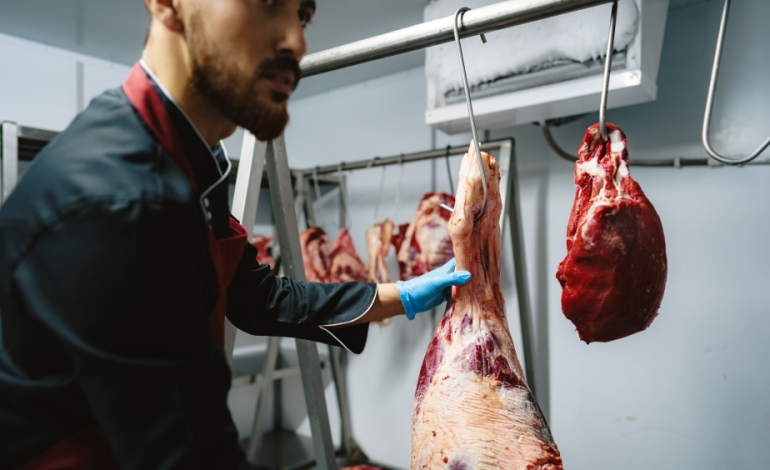
4. Temperature & Humidity Monitoring
- Automated sensors continuously track cold storage conditions.
- Alerts staff if parameters deviate, protecting meat quality.
- Maintains strict Halal handling standards during storage and transport.
5. Digital Traceability Systems
- RFID tags and barcode scanning track meat through the supply chain.
- Provides real-time data for quality control and regulatory compliance.
- Builds consumer trust by ensuring transparency.
Benefits of Automation
- Enhances efficiency and reduces operational costs
- Improves consistency, hygiene, and Halal compliance
- Protects workers from repetitive tasks and hazardous operations
- Minimizes errors and supports regulatory inspections
- Provides data-driven insights for process improvement
Integrating Automation with Halal Standards
Automation must complement, not replace, ethical Halal practices:
- Staff training remains essential to ensure correct procedures.
- Automated tools must be designed for easy cleaning and maintenance.
- Segregation of Halal and non-Halal processes is mandatory.
Conclusion
Automation in Zabiha meat processing is a game-changer, providing speed, consistency, and enhanced safety without compromising Halal integrity. From automated slaughtering and cutting to packaging and digital monitoring, these systems streamline operations, protect workers, and maintain high-quality standards.
By adopting automation thoughtfully, Halal slaughterhouses can operate efficiently, safely, and ethically—meeting growing consumer demands while upholding religious and quality commitments.