What Is Zabiha Slaughter? Requirements, Standards, and How to Verify a Slaughterhouse

If you’ve ever picked up a package of meat labeled “halal” and wondered whether it actually meets a specific religious standard, you’ve bumped into the exact question this post answers: what is zabiha slaughter, and how is it different from a general halal claim? This guide covers the core zabiha slaughter requirements, walks through what separates a genuinely compliant operation from one just using the word loosely, and gives you a practical process for how to verify a zabiha slaughterhouse before trusting its meat.
What Is Zabiha Slaughter, Exactly?
“Zabiha” (also spelled dhabiha) refers to the specific Islamic method of animal slaughter required for meat to be considered halal under a strict, verifiable standard. It’s not just a religious label — it’s a defined process with specific conditions that must be met at the moment of slaughter, not just somewhere earlier in the supply chain.
Our post on Understanding Halal Slaughtering Rules breaks down the foundational rules in detail, and it’s a good starting point if you’re newer to the topic. In short, zabiha slaughter requires a swift cut to the throat, performed by hand, with the animal’s blood fully drained, while specific religious conditions are observed around the animal’s treatment and the intention behind the act.
The Core Zabiha Slaughter Requirements
While the fine details can vary slightly between certifying bodies and schools of thought, the essential zabiha slaughter requirements generally include:
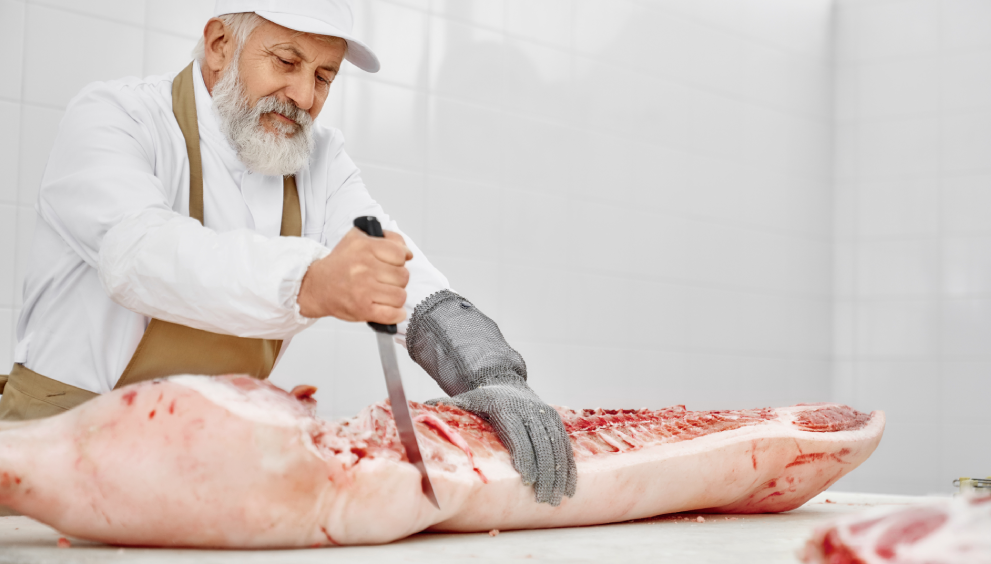
The person performing the slaughter must be a sane, adult Muslim who understands and intends to perform the act according to Islamic guidelines. Not every slaughterhouse worker is automatically qualified simply by working at a “halal” facility — this is one of the most commonly overlooked requirements.
The animal must be alive and healthy at the time of slaughter. An animal that is already dead, or dying from illness or injury prior to the cut, does not qualify.
The cut must sever the trachea, esophagus, and both carotid arteries and jugular veins in a single, swift motion using a sharp blade, minimizing the animal’s pain and distress.
Blessing must be invoked at the time of slaughter, acknowledging the act as being performed with religious intention rather than as a purely mechanical process.
The blood must be fully drained from the carcass before further processing, since consuming blood is prohibited under Islamic dietary law.
The animal must not witness other animals being slaughtered, and should be treated with care and minimal distress leading up to the process — a requirement that ties directly into the ethical dimension of zabiha slaughter.
For a deeper look at how these ethical dimensions are actually implemented on the ground, our Ethical Practices category covers this in more depth, since compliance isn’t only about the technical cut — it’s about the surrounding treatment of the animal too.
Why the Requirements Matter Beyond Religious Compliance
Beyond the religious dimension, these requirements also have real food safety and quality implications. Complete blood drainage, for instance, affects both shelf life and how the meat behaves in cooking. A slaughterhouse that’s cutting corners on the religious requirements is often cutting corners on hygiene and quality controls too — which is exactly why verification matters as much as it does.
Our Inspection & Compliance category covers how legitimate facilities are actually monitored and audited to confirm they’re meeting these standards consistently, not just on the day an inspector happens to visit.
How to Verify a Zabiha Slaughterhouse
Here’s where most people get stuck — knowing the requirements is one thing, but actually confirming a specific slaughterhouse or supplier meets them is a different challenge. A practical verification process looks like this:
1. Ask which certifying body verifies their zabiha compliance, by name. A legitimate facility should answer this without hesitation and be able to provide documentation.
2. Confirm the certification covers the entire supply chain, not just a single batch. Some facilities pass a one-time audit and continue marketing themselves as certified long after their practices have drifted from the standard.
3. Ask about staffing qualifications directly. Since the person performing the slaughter must meet specific religious qualifications, ask how the facility verifies and trains its slaughtermen. Our Workforce & Training category covers what proper training and qualification verification should look like.
4. Look into their hygiene and safety protocols. A facility that takes zabiha compliance seriously typically takes food safety seriously too. Our Hygiene & Safety category outlines the standards worth asking about.
5. Check whether they can speak to traceability. Reputable operations can typically tell you where an animal came from and trace it through processing. If a facility can’t answer basic traceability questions, that’s a warning sign.
6. Review their equipment and technology. Modern zabiha-compliant facilities increasingly document their processes with technology that supports auditability. Our Equipment & Technology category covers what this looks like in well-run operations.
If you want a broader set of commonly asked verification questions laid out in one place, our Answers to Frequently Asked Halal Meat Questions post and Common Questions page both cover the questions people ask most often when trying to confirm a source is legitimate.
Common Misconceptions That Make Verification Harder
One of the biggest obstacles to verifying a zabiha slaughterhouse is confusion over terminology. Many people assume “halal” and “zabiha” are interchangeable, when in practice “halal” is the broader dietary category and “zabiha” refers specifically to the slaughter method. A product can carry a general halal label without necessarily meeting the more specific zabiha slaughter requirements outlined above.
Another common misconception is that certification is permanent — that once a facility is certified, it stays compliant indefinitely. In reality, ongoing compliance depends on consistent practice, not a one-time audit, which is why the Regulatory Updates and Halal Market Insights categories are worth checking periodically — standards and oversight in this space continue to evolve.
What This Means for the Meat You Buy or Serve
Whether you’re a consumer buying meat for your household or a business sourcing for a restaurant or catering operation, the same principle applies: don’t rely on a label alone. Ask direct questions, request documentation, and be wary of vague or evasive answers. If you’re specifically comparing the health and nutritional side of zabiha meat once you’ve confirmed sourcing, our Meat Nutrition category — including posts like Comparing Zabiha Meat vs. Non-Halal Meat — is a useful next read.
A Simple Checklist Before You Trust the Label
- Ask for the name of the certifying body and request documentation.
- Confirm the certification is current, not a one-time historical audit.
- Ask how slaughtermen are qualified and trained.
- Check hygiene, safety, and traceability practices.
- Be skeptical of vague answers — a legitimate operation won’t hesitate to explain its process.
Frequently Asked Questions
What is zabiha slaughter in the simplest terms? Zabiha slaughter is the specific Islamic method of slaughtering an animal for its meat to be considered halal under a strict, verifiable standard — including who performs it, how the cut is made, and how the blood is drained.
Is all halal meat automatically zabiha? No. “Halal” is the broader dietary category, while “zabiha” refers to the specific slaughter method. Some products marketed as halal may not meet the full zabiha slaughter requirements, which is why direct verification matters.
What are the biggest zabiha slaughter requirements people overlook? The qualification of the person performing the slaughter and the complete draining of blood are two requirements that are often overlooked or assumed rather than verified.
How can I verify a zabiha slaughterhouse if I can’t visit in person? Ask directly for their certifying body’s name and request documentation. Legitimate facilities are generally transparent about this, even remotely.
Does zabiha certification expire or need to be renewed? Ongoing compliance depends on consistent practice, not a single audit. Reputable certifying bodies conduct periodic re-verification, so it’s worth asking how recently a facility’s certification was last confirmed.